

Apple's Enterprise Developer Program has been the backbone of private iOS app distribution for over a decade. But getting a new Enterprise account approved has become nearly impossible since 2022, and Apple keeps pushing organizations toward Apple Business Manager instead. If you're planning your iOS distribution strategy, here's what actually changed and what your options look like now.
What the Enterprise Developer Program does
The Enterprise Developer Program ($299/year) gives organizations an in-house signing certificate. With it, you can sign any app and distribute it directly to company-owned devices, no App Store review required. This made it the fastest path for deploying internal tools, line-of-business apps, and custom integrations.
The program was designed for one specific use case: distributing apps to your own employees on company devices. Apple's terms explicitly prohibit sharing Enterprise-signed apps with customers, partners, or the general public.
Why Apple started restricting access
The crackdown started after high-profile incidents in 2019. Facebook and Google were both caught using Enterprise certificates to distribute data-collection apps to consumers, a clear violation of the program's terms. Apple revoked their certificates, temporarily killing internal tools at both companies.
Since then, Apple has made the enrollment process significantly harder. New applications require detailed justification, supporting documentation, and manual review by Apple's team. Approval timelines stretched from weeks to months. Many applicants report being rejected without clear explanation, or receiving no response at all.
By 2024, Apple had all but stopped approving new Enterprise accounts for organizations without a large existing iOS footprint. The message was clear: Apple Business Manager is the future.
Apple Business Manager as the replacement
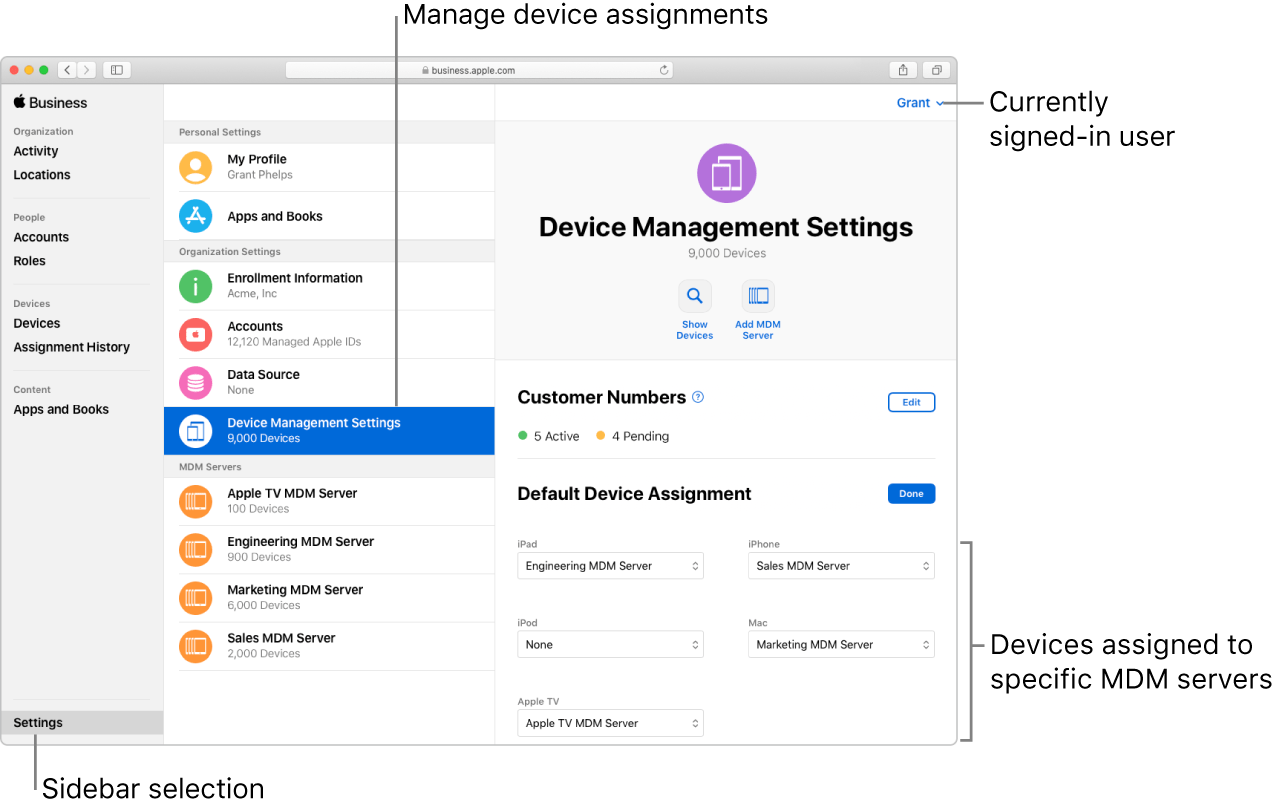
Apple Business Manager (ABM) handles three things: device enrollment (through ADE), app distribution (through custom apps and volume purchasing), and Managed Apple ID management. For private app distribution specifically, ABM lets you upload custom apps that only your organization can see and install.
The key difference from Enterprise signing: custom apps submitted through ABM still go through Apple's review process. This adds a delay (typically 24 to 72 hours for updates), but it also means Apple validates that your app meets basic security and quality standards. For compliance-heavy industries like healthcare or finance, this review step actually helps satisfy audit requirements.
ABM combined with a Mobile Device Management solution gives you silent app installation, automatic updates, and remote removal. Devices enrolled through Automated Device Enrollment receive your app catalog during setup, before the employee even touches the device.
Explore
See the full platform
Enrollment, apps, security, remote support: all in one place.
Explore Appaloosa →What if you already have an Enterprise account?
Existing Enterprise certificates still work. Apple hasn't announced an end-of-life date, and renewals continue to be processed normally. If your organization holds an active membership, you can keep using it.
That said, building your entire distribution strategy around a program Apple clearly wants to phase out carries risk. A prudent approach: maintain your Enterprise certificate for legacy apps and ad-hoc testing, but migrate production distribution to ABM and an MDM. This way, if Apple does sunset the program, you're already running on the replacement.
Alternatives for organizations that can't get Enterprise access
If you're starting fresh and Apple won't approve an Enterprise account, you have three practical options:
ABM with custom apps covers most internal distribution needs. The review delay is the main trade-off, but for apps that don't change daily, it's manageable.
TestFlight works for beta testing with up to 10,000 users, but builds expire after 90 days and the experience isn't suitable for production use.
An enterprise app store like Appaloosa gives you a private catalog where employees install apps directly. You upload your IPA, define access by group or role, and manage versions centrally. This works alongside ABM for managed devices and supports self-service installation for BYOD scenarios.
The bottom line
Apple's Enterprise Developer Program isn't dead, but it's no longer accessible to new organizations. If you're planning private iOS distribution today, build on ABM and an MDM as your foundation. Add an enterprise app store if you need flexibility for partners, contractors, or mixed iOS/Android fleets. And if you still hold an Enterprise certificate, start your migration plan now rather than waiting for Apple to force the issue.